

Smart Homes & The "DIY" Inventor: Can Your Side Project Be a Tax Break?
Learn when DIY smart home and software projects qualify for R&D tax credits in 2026, including Section 174A expensing, payroll offsets, and documentation rules.
image for illustrative purpose
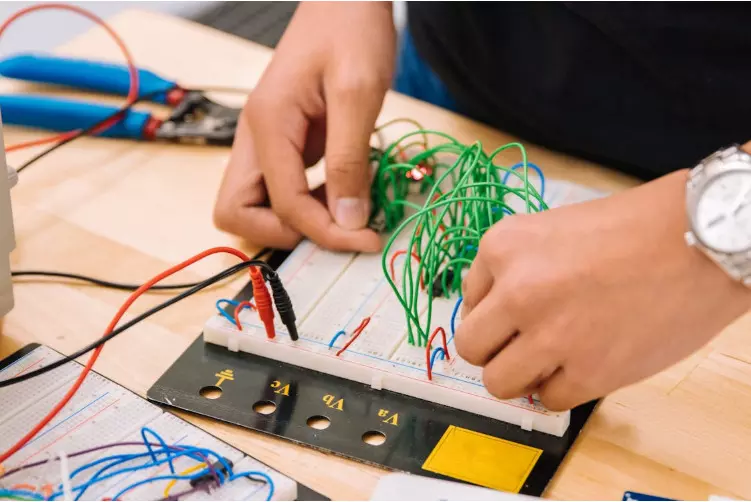
You built a sensor that cuts false alarms at night. You trained a model to predict HVAC drift. Maybe you just wanted a smarter home. Then the project grew legs. At some point, a side build can call for R&D tax consulting.
This article explains when a DIY smart home project can support tax benefits in 2026. You will learn the key tests, the cost rules, and the documentation that matters. You will also see how startups can turn credits into payroll relief.
The “Business Component” Test: Is Your Hobby a Business?
A tax break starts with intent and direction. A weekend hobby stays personal when it has no commercial path. Your project begins to look like a business component when you aim to sell it, license it, or use it in a trade.
Intent needs more than a hopeful sentence. Create a short project statement and keep it updated. Note the user, the market, and the expected use. Even a small plan can show you moved beyond casual tinkering.
The invention also needs a permitted purpose. That means it targets improvement in function, performance, reliability, or quality. Smart home work often fits well. Examples include a better intrusion detection algorithm, a lower-power IoT sensor, or firmware that reduces device dropouts.
Treat the work like a real project once you cross that line. Separate purchases from personal spending. Track time spent on development tasks. Keep notes on technical goals, not lifestyle goals. These habits support DIY Tech Project Deductions and reduce later confusion.
Restoring Immediate Expensing: The Section 174A Advantage
A major 2026 benefit is Section 174A Immediate Expensing. Under the OBBBA approach described in this brief, many domestic research and software development costs can be deducted in the year incurred. That change helps inventors who used to face multi-year cost recovery.
Immediate expensing changes how you budget. Instead of spreading certain costs, you may take a full write-off for eligible domestic research spend. This can improve cash flow planning and reduce taxable income in the build phase. It also rewards careful tracking, since the timing of spend now matters more.
For a smart home inventor, “spent” can include several practical categories. Keep each item tied to a development purpose, not general household use.
Prototyping materials, such as circuit boards, sensors, wiring, and 3D printing supplies
Specialised software tools and licences used for development and testing
Cloud computing fees are tied to training models, running simulations, or automated testing
Contractor or freelance technical work that supports development tasks
Test equipment and devices used to measure performance under real conditions
If an item serves mixed purposes, document the allocation. A portion may qualify, and a portion may stay personal. Clear allocation notes carry more weight than a guess made next April.
Passing the Four-Part Test in Your Home Lab
The credit rules still require more than spending money. The IRS Four-Part Test for Inventors focuses on technical work aimed at resolving uncertainty. Smart home projects often qualify because they rely on computer science, engineering, and measurable performance.
First, the work needs a permitted purpose. You must aim to improve function, performance, reliability, or quality. Second, the work must be technological in nature. That can include software engineering, electrical design, or applied data science. Third, you need technical uncertainty at the start. You must face a question about capability, method, or appropriate design. Fourth, you must run a process of experimentation. That includes trials, prototypes, modelling, testing, and iteration.
Failure can still count. If you spent $5,000 trying to build sun-tracking blinds and the model never stabilised, the effort may still qualify. The key is the attempt to resolve uncertainty through experimentation. Those costs can fall under Qualified Research Expenses for Software when the work meets the test.
The table below shows what each part looks like in a home lab setting. It also shows the kind of evidence to save as you go.
Four-part factor
| What it looks like in a DIY smart home project | Evidence to keep |
Permitted purpose
| Improving sensor accuracy, latency, battery life, or reliability | Clear goal statement, benchmarks, before-and-after metrics |
Technological in nature
| Engineering or computer science drives the solution | Architecture notes, schematics, model design notes |
Technical uncertainty
| You do not know if the approach will work at the start | Risk list, unknowns, hypotheses, decision logs |
Process of experimentation
| Iterative testing to resolve the uncertainty | Test plans, results, version history, prototype photos |
Aim for clarity, not volume. A short weekly log plus saved test results often beats a thick folder of receipts.
The $500,000 Payroll Tax Offset: A Boost for Startups
When a side project becomes a small company, the credit can shift from “nice” to “material.” Some startups can apply the R&D credit against payroll taxes, not only income taxes. This matters for pre-revenue teams with limited taxable income.
The Startup Payroll Tax Offset 2026 concept in this brief focuses on small businesses under a gross receipts threshold. In many cases, that threshold is framed as under $5 million in gross receipts, with other eligibility limits. If you qualify, the credit can offset payroll taxes up to a stated cap. This brief uses a $500,000 ceiling, which can meaningfully reduce cash burn.
Documentation standards become stricter as the value rises. Your narrative must match your technical work. Your cost totals must tie to records. Your payroll filings must align with the credit election. Many founders seek a specialised review before claiming this benefit. In Texas, teams often work with advisors such as Evans Sternau CPA Texas for that check.
Do not wait until filing week to assemble the story. Build it while the work happens. That approach reduces rework and supports a confident claim.
Documentation: The DIY Inventor’s “Black Box”
In 2026, a box of receipts rarely tells the full story. Digital-first review practices expect more detail and better timing. Your records should show what you tried, why you tried it, and what changed after testing.
Capture contemporaneous evidence. Keep time-stamped development logs. Use version control for code. Save screenshots of model runs and error traces. Take photos of early prototypes, even the ugly ones. Store invoices for parts and licences, then link them to the sprint or experiment.
Treat your log like a lab notebook. Record the uncertainty you aimed to resolve. Note the options you considered and why you chose one. Document pivots in design and the test results that drove them. This creates an audit-ready trail and supports future goals, like a patent filing or a sale.
Start small if the process feels heavy. A weekly routine works well. Write a short progress note every Friday. Upload receipts the same day. Tag commits to key experiments. Over time, the “black box” becomes a clear story of innovation, and the tax work becomes easier to defend.





